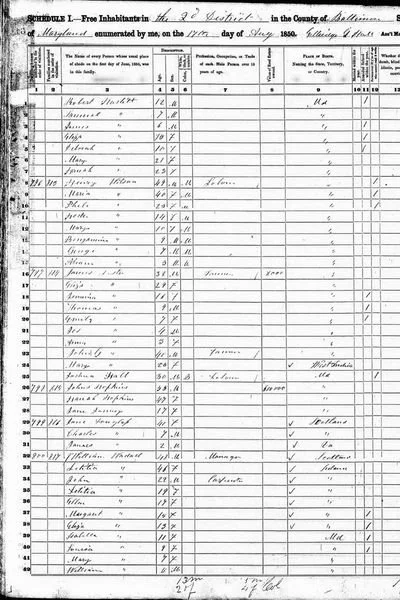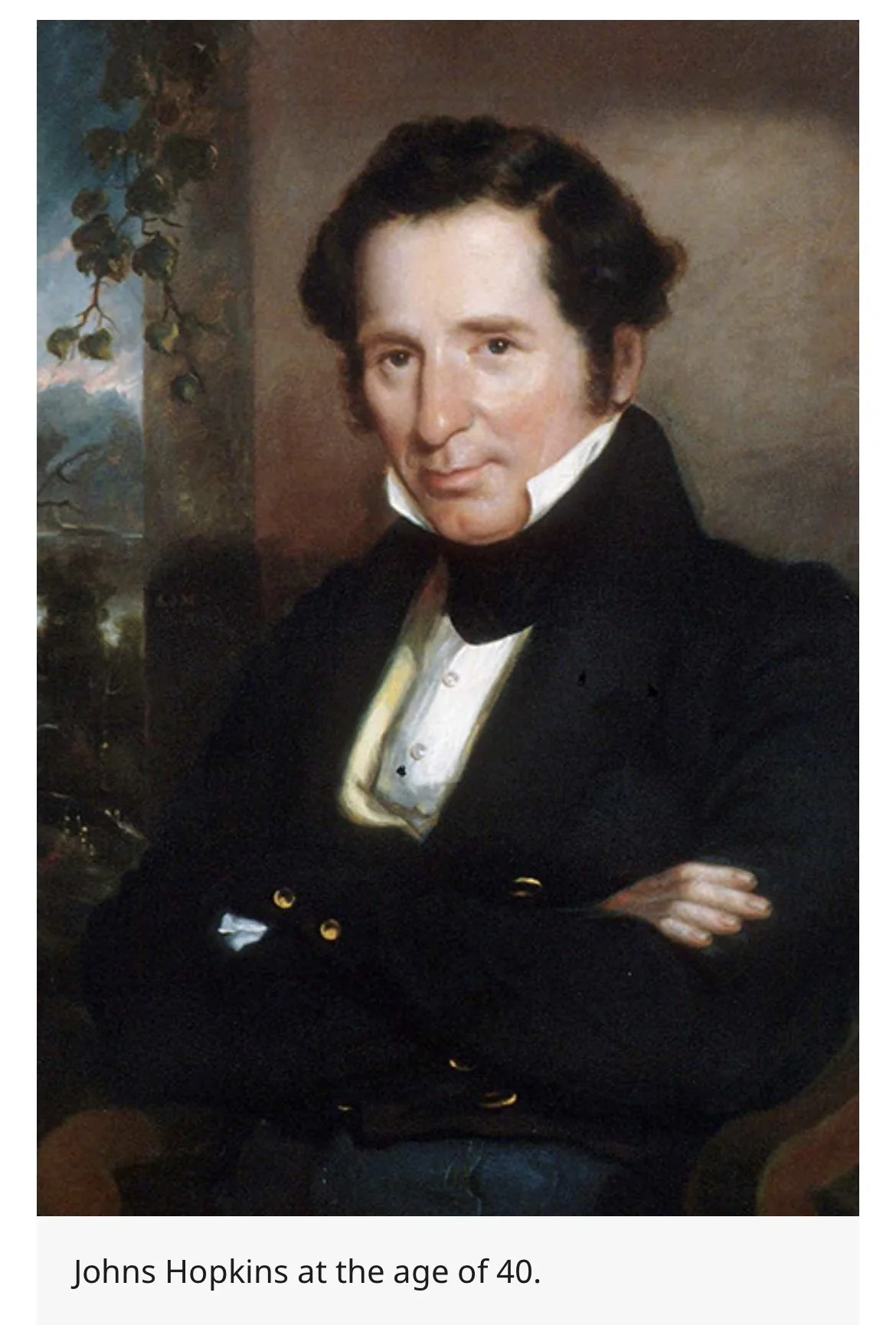
An Examination of a Maryland Mystery: Johns Hopkins, Clifton, and the 1850 Census
In 2020, a public claim that Johns Hopkins had been a slave owner reshaped the conversation around his life and legacy. That claim received wide attention and, in many quarters, quickly hardened into accepted fact. Yet the historical record surrounding Johns Hopkins, Clifton, and the 1850 census is more complex than those early assertions suggested, and the conclusions drawn from it have required much deeper review and more careful interpretation.
This page brings together the principal research and scholarship that emerged in response to that claim. What began with a single disputed census entry grew into a deeper investigation of the historical evidence, the broader world in which Johns Hopkins lived, and the questions that still surround the record today. Taken together, these materials offer a fuller, more carefully documented
understanding of Johns Hopkins, his family, and their relationship to slavery and abolitionism. They also reveal how quickly a simplified narrative can take hold, and how important it is to return to the evidence with care, context, and rigor.
At Friends of Clifton Mansion, we believe that preserving history also means continuing to question, research, and refine what is thought to be known. By bringing these materials together in one place, we hope to support a fuller and more accurate understanding of Johns Hopkins, Clifton, and their place in Baltimore's .history.
A mysterious census entry. Four unnamed men. A historical record under renewed scrutiny. Published in Maryland Historical Magazine, this new peer-reviewed article deepens the authors’ earlier work on the 1850 census record at Clifton. Through broader historical context and additional archival research, it offers a fuller, more historically grounded understanding of Johns Hopkins, his family, and the complicated world in which they lived.
A Unraveling a Maryland Mystery: Johns Hopkins, Clifton, and the Census of 1850
This short-form documentary reveals newly discovered facts and thoughtful insights surrounding Johns Hopkins and how he and the Quakers viewed and addressed issues of slavery. More specifically, it explains that the presence of the “four men" likely reflected an emancipationist strategy rather than slaveholding by Hopkins himself and discusses the important roles played by Hopkins’ sister, Eliza Hopkins Crenshaw, and her husband, Nathaniel C. Crenshaw, both devout Quakers and antislavery advocates.
“What began as a passion project has evolved into something more. We’re proud of where we’ve been and even more excited for what’s ahead. What sets us apart isn’t just our process—it’s the intention behind it. We take time to understand, explore, and create with purpose at every turn.”
A Maryland Mystery: Johns Hopkins, the 1850 Census, and Slavery
It began with a single line in an 1850 census and a set of questions too important to ignore. Drawn together by a shared commitment to follow the evidence carefully, an International Studies Program Director and Senior Lecturer, a Professor, a retired state archivist, and the great-great-nephew of Johns Hopkins began a deeper investigation into the historical record surrounding Johns Hopkins, Clifton, and slavery. Originally published on October 13, 2022, Seeking the Truth: Johns Hopkins and Slavery invites readers into that inquiry and the larger historical questions it uncovered.