CELEBRATING 30 YEARS
Thirty Years of Stewardship
Restoring Clifton Mansion. Preserving Its Future.
THE STORY OF FRIENDS OF CLIFTON MANSION
Thirty Years Ago, Clifton Mansion Needed Friends.

One of Baltimore’s most significant landmarks needed more that repairs. It needed an organization devoted entirely to protecting its future.
A descendant of the Johns Hopkins family and a devoted Baltimore civic leader, Samuel understood that saving Clifton would require more than a series of repairs.
It would take a dedicated organization, sustained stewardship, and people willing to remain committed to the work for years to come.
On July 29, 1996, he founded Friends of Clifton Mansion.

By 1996, Clifton Mansion had already stood for nearly two centuries.
It had begun as the country estate of Captain Henry Thompson before Johns Hopkins transformed it into a grand Italianate summer home overlooking Baltimore. Its rooms had welcomed prominent guests, its tower had risen above the city for generations, and it was here that Hopkins considered the philanthropic legacy that would change medicine, education, and Baltimore itself.
But time had not been kind to Clifton.
Its once elaborate interiors had been painted over. Water, weather, changing uses, and decades of wear had taken their toll. Decorative finishes had disappeared beneath layers of paint, and some of the craftsmanship that made Clifton extraordinary was in danger of being lost.
Clifton was still standing, but its future was far from certain.
Samuel Hopkins could see what was at stake. He saw more than a deteriorating building. He saw a Baltimore landmark worth fighting for.
That belief became the beginning of everything that followed. He understood that Clifton Mansion needed a dedicated organization committed solely to its preservation.
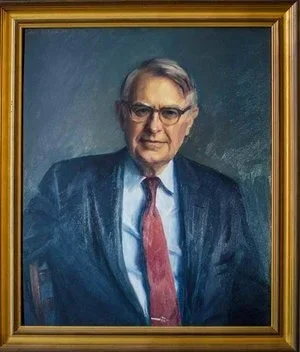
Samuel Hopkins, Founder of Friends of Clifton Mansion
From the beginning, Samuel understood that the work would extend beyond his own lifetime. When he formed Friends of Clifton Mansion, he enlisted the support of his four sons, Henry, Fred, Sam, and Robert, bringing them onto the Board and making Clifton’s future a shared family responsibility.
Following Samuel’s death in 2008, his sons continued the mission he had begun. Henry succeeded his father as President in 2009, Fred serves as Secretary, and Sam and Robert remain members of the Board.
What began as one man’s determination to save Clifton became another generation’s promise to restore it.
He saw more than a deteriorating building. He saw a Baltimore landmark worth fighting for.
That belief became the beginning of everything that followed.
Securing Clifton’s Future
Before Clifton’s hidden beauty could be revealed, its future had to be secured.
From its earliest days, Friends of Clifton Mansion worked in partnership with Civic Works to save and rehabilitate the building. Before conservators could uncover historic colors or craftspeople could recreate long-lost details, the Mansion’s most urgent structural and mechanical needs had to be addressed.
Years of deterioration had left Clifton requiring extensive repairs. The roof and exterior needed attention. Aging plumbing and electrical systems had to be replaced. The building needed modern heating and cooling, improved accessibility, and the infrastructure required to remain in active use.
That essential work culminated in a major rehabilitation completed in 2014. With the support of Friends of Clifton Mansion, Civic Works repaired the roof, installed a geothermal heating and cooling system, modernized the plumbing and electrical systems, added an elevator, and restored and repainted the exterior.
It was not yet the highly visible restoration of murals, decorative painting, and historic interiors. It was the difficult, necessary work that made all of that possible.
Clifton Mansion had been stabilized, rehabilitated, and prepared for its next chapter.
The building was secure. Now, Friends of Clifton Mansion could begin uncovering the extraordinary architectural and artistic jewel that had been hidden for far too long.

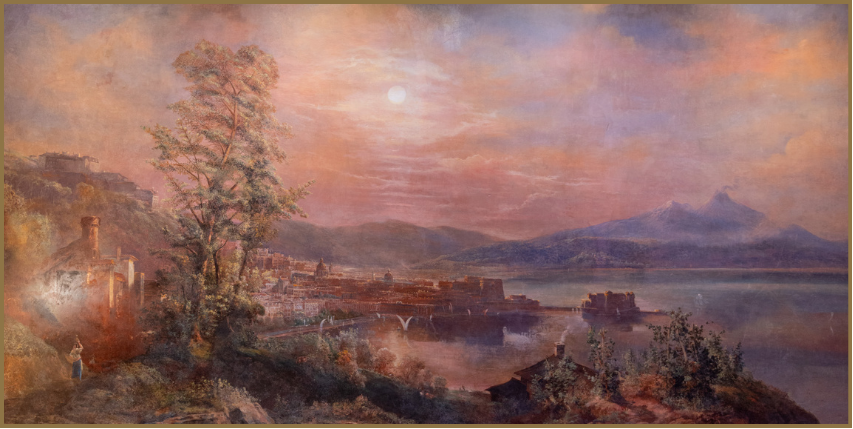
Friends of Clifton Mansion assembled an extraordinary team to uncover and restore what had been hidden for generations.
Clifton Begins to Reveal Itself
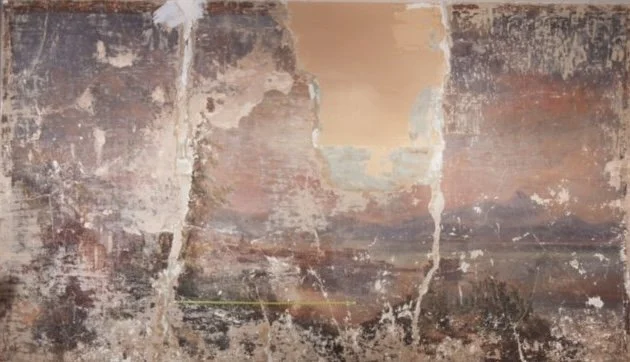
Bay of Naples mural prior to full restoration.
With the building secure, Friends of Clifton Mansion could finally turn its attention to the remarkable architecture and artistry hidden inside.
This would not be an ordinary renovation. Clifton’s historic interiors had been altered, damaged, and painted over for generations. Recovering them would require careful research, physical investigation, specialized craftsmanship, and a team capable of working to the highest preservation standards.
Friends of Clifton Mansion brought together architects, conservators, decorative painters, designers, craftspeople, and historic restoration specialists to study the building and allow the surviving evidence to guide the work.
Phase I began in Clifton’s most dramatic entrance spaces: the five-story Tower, the Grand Entrance, the Samuel and Anne Hopkins Grand Stairway, and the Bay of Naples mural.
As layers were carefully examined and removed, Clifton began to reveal itself. Historic colors emerged. Decorative painting reappeared. Ornamental plasterwork was repaired and recreated. The Mansion’s enameled glass, architectural details, and elaborate finishes once again became part of the experience of entering Clifton.
The restoration was no longer only about protecting the building.
It was about recovering the Clifton Mansion that Johns Hopkins had known.
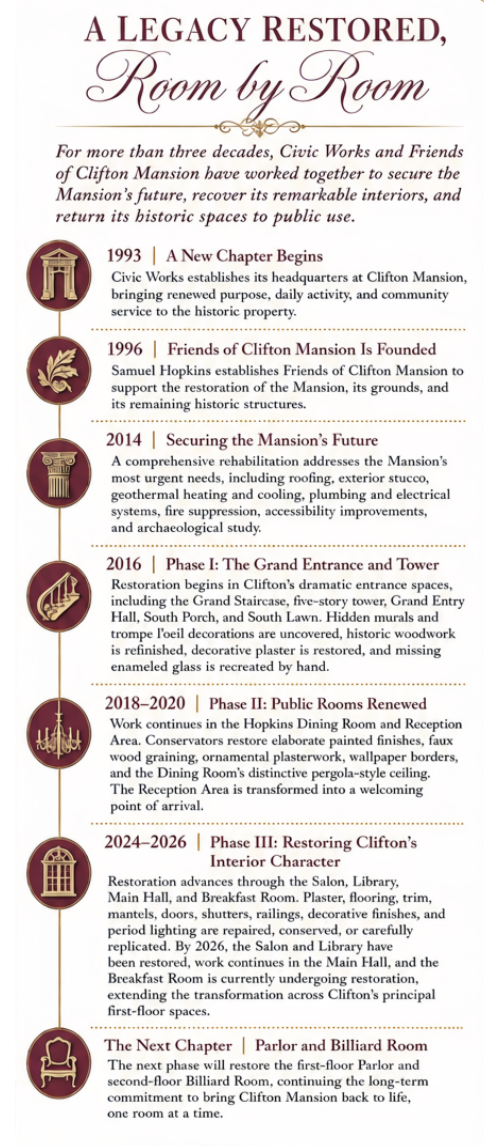
ROOM BY ROOM, CLIFTON RISES AGAIN
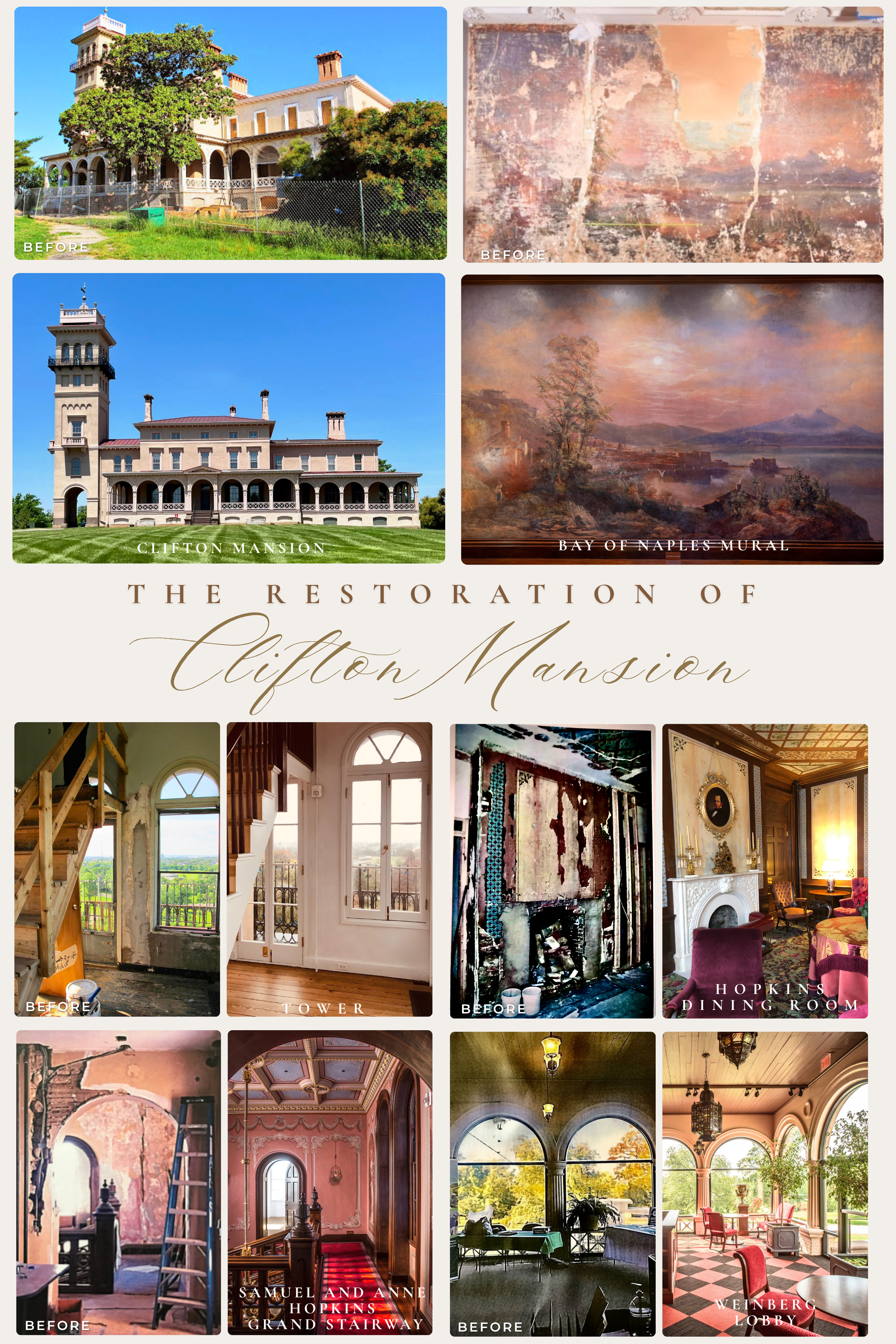
With each completed space, Friends of Clifton Mansion revealed more of the artistry, craftsmanship, and history hidden within the Mansion.
The success of Phase I proved what was possible. Friends of Clifton Mansion continued the work, moving deeper into the Mansion and taking on spaces with their own histories, challenges, and remarkable decorative details.
Phase II centered on the Hopkins Dining Room. Beneath years of alteration, conservators uncovered an extraordinary interior filled with faux wood graining, ornamental painting, decorative borders, and a distinctive vine-covered lattice ceiling.
Each surface required careful study. Historic finishes were stabilized and restored, missing details were recreated, and the room’s elaborate decorative scheme gradually returned.
The restoration then extended into the Reception Area, South Porch, Weinberg Lobby, and South Lawn. Friends also stabilized the Gardener’s Cottage, protecting one of the last surviving structures from Clifton’s historic grounds and preserving the possibility of its future restoration.
By the completion of Phase II, Friends of Clifton Mansion had done more than restore a series of individual spaces. The organization had begun reconnecting the rooms, landscape, and architectural details that together tell the larger story of Clifton.
New Chapter Unfolds
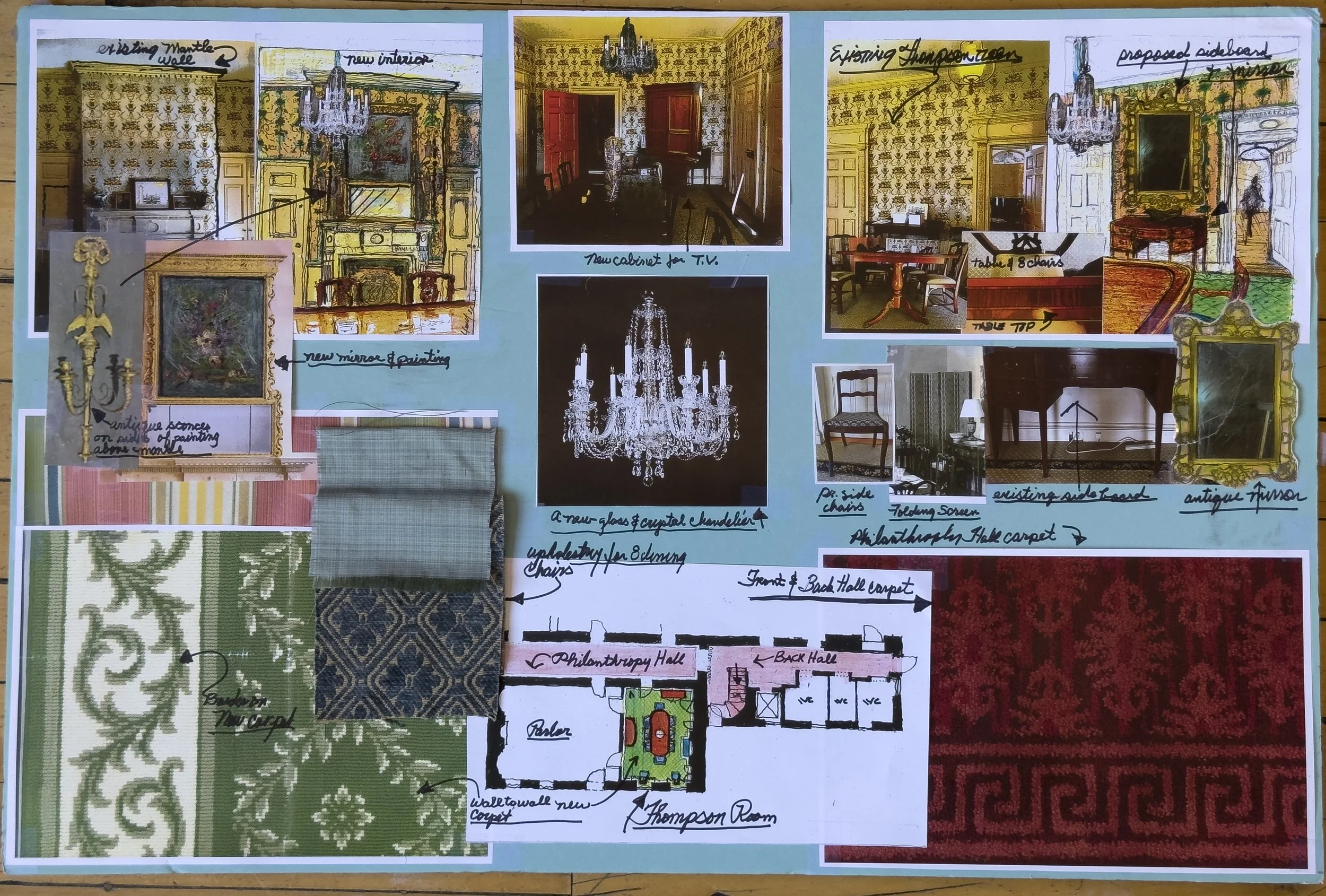
The restoration advances through the Salon, Library, Main Hall, and Thompson Dining Room.
Beginning in 2024, Friends of Clifton Mansion moved into another group of richly layered interiors, guided once again by research, surviving evidence, and exceptional craftsmanship.
Work began in the Salon and Library, where conservators studied surviving paint evidence, decorative plasterwork, gilded details, and architectural features to recover the character of each room. Historic colors returned, missing elements were recreated, and spaces altered by generations of use once again began to reflect their nineteenth-century elegance.
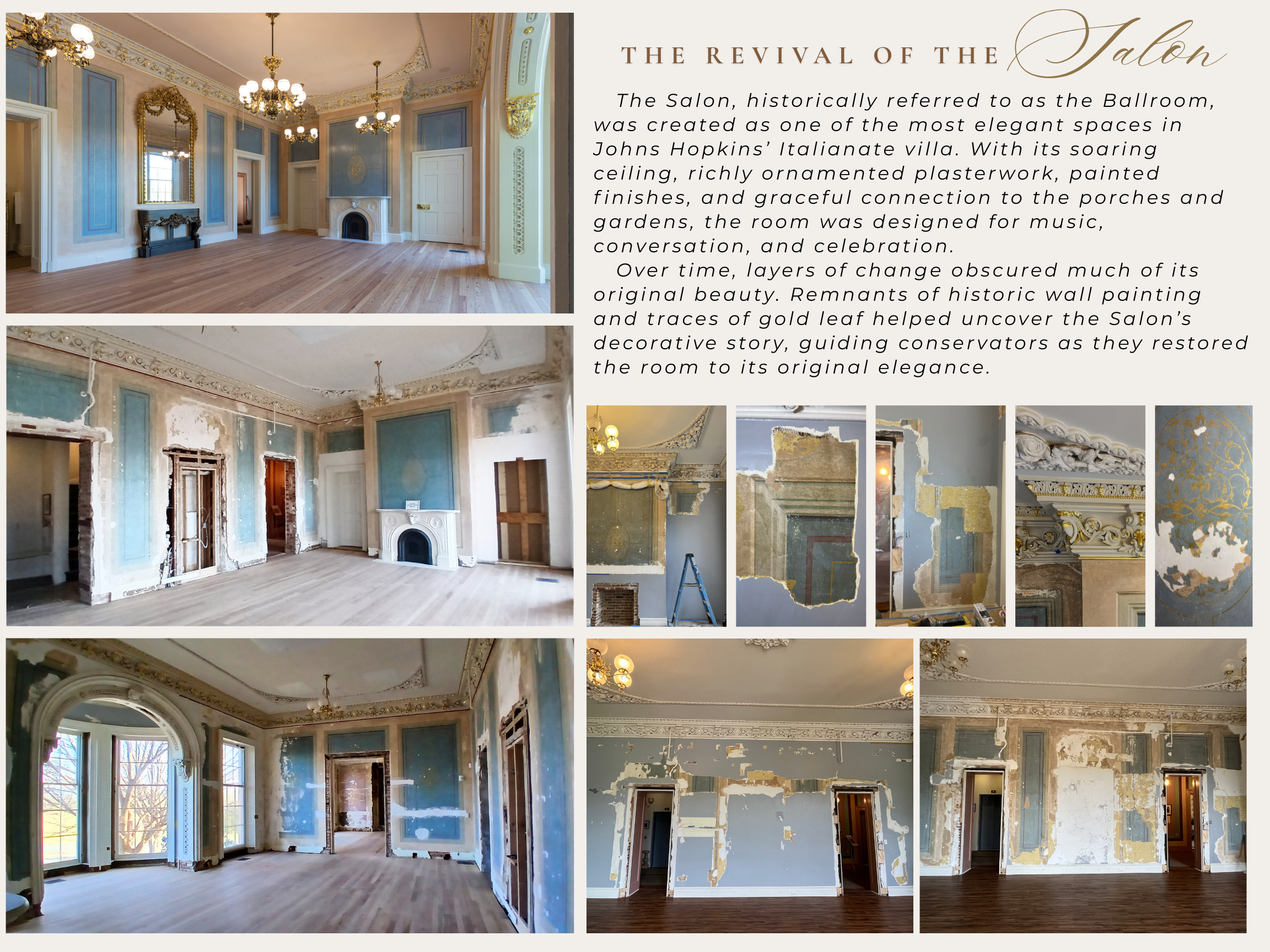
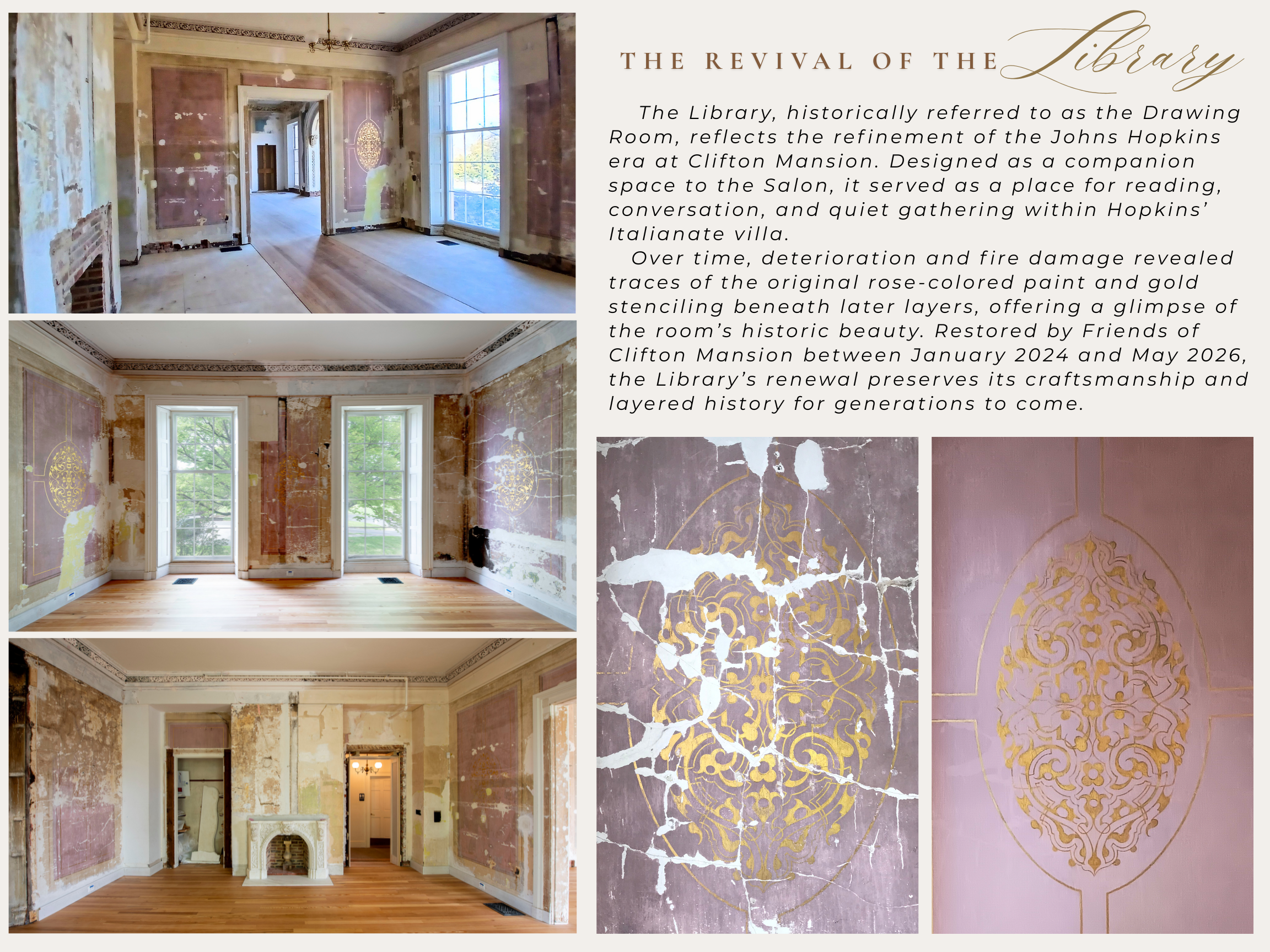
The restoration then moved into the Main Hall, where renewed architectural details and historic finishes will provide the setting for Clifton Mansion’s Philanthropy Hall, a permanent exhibition exploring Baltimore’s tradition of philanthropy, civic leadership, and community service.
Work is also underway in the Breakfast Room, continuing Friends of Clifton Mansion’s commitment to restoring Clifton one carefully researched room at a time.
With each completed space, more of the Mansion’s story comes into view, and Clifton moves closer to a future in which its history can be fully experienced, understood, and shared.
More Than a Building
A House With a Living Purpose
Clifton remains both a historic landmark and the active home of service throughout Baltimore.
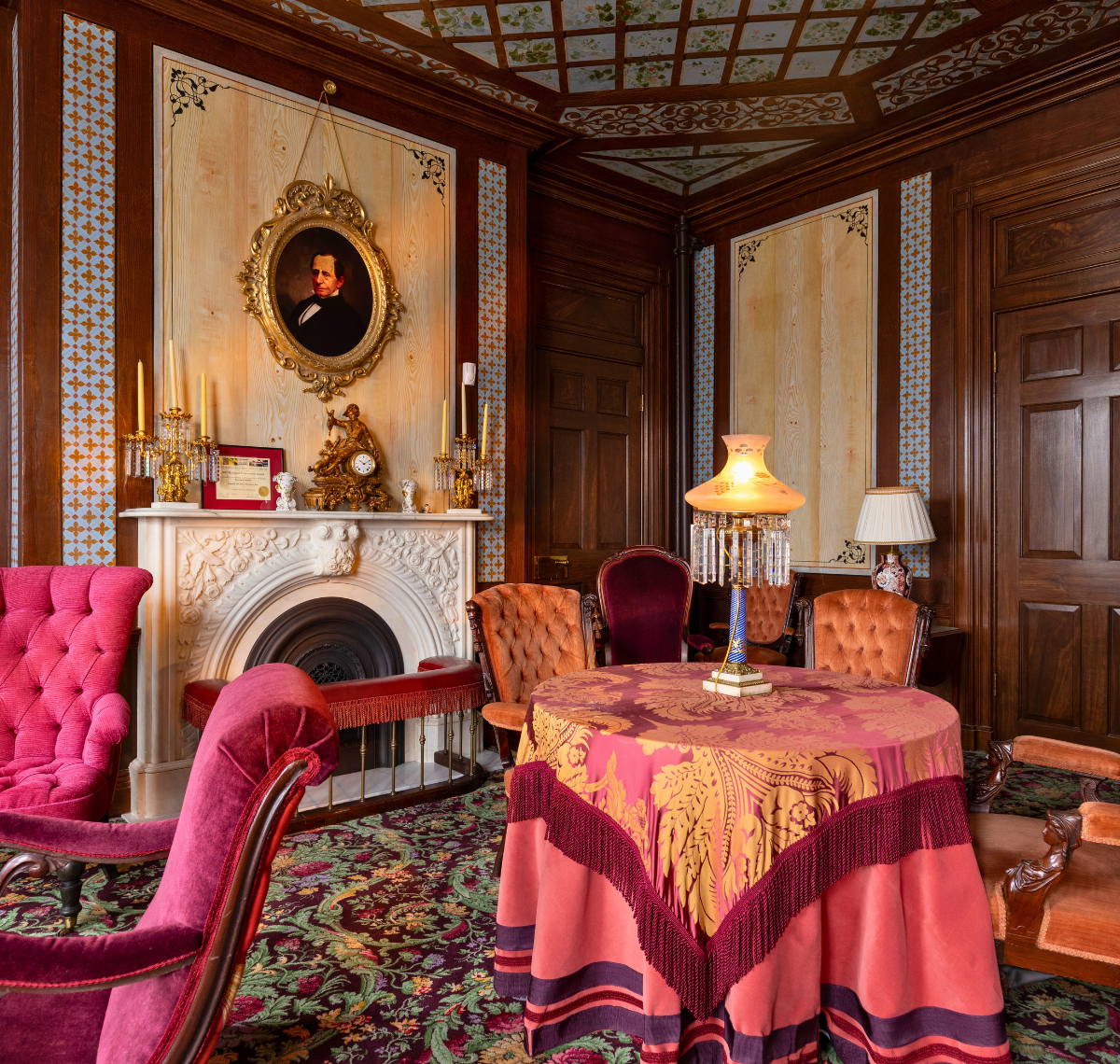
As the longtime headquarters of Civic Works, Clifton Mansion remains connected to public service, job training, education, environmental stewardship, and housing assistance throughout Baltimore.
The enduring partnership among Friends of Clifton Mansion, Civic Works, and Baltimore City Recreation and Parks ensures that Clifton's history continues to meet its present.
THIRTY YEARS, MANY HANDS
This Is a Story About People
Buildings do not save themselves.
Every restored surface, recovered detail, and renewed room reflects the knowledge and dedication of people who believed Clifton Mansion mattered.
For thirty years, Friends of Clifton Mansion has brought together an extraordinary community of architects, conservators, decorative painters, craftspeople, designers, historians, project leaders, community partners, and restoration specialists.
Some brought highly specialized knowledge. Some recovered details with their own hands. Some solved difficult architectural problems. Others helped guide the work, secure the resources, and sustain the partnerships that allowed the restoration to continue.
Together, they transformed spaces once threatened by deterioration into rooms that again reveal their history, artistry, and meaning.
This anniversary belongs to all of them.
-
DescripHenry H. Hopkins
Christopher Weston, AIA
Kathleen “KD” Durham
Thomas P. McCracken†tion text goes here -
Vincent Greene
Henry P. Johnson
Gordon Hayward
Thomas M. Moore†
Thomas Moore Studios -
Matthew J. Mosca
Laurie Timms
Gillian Quinn
Susan Crawford
Mariah Gillis Elena Hutchings
Doug Johnson
Bridget Cimino -
Nicholas Cairns
Timothy Horjus
C & H Restoration and Renovation
Kevin Davis
Mark Mordhorst, Historic Plaster Specialist
Jason Shellenhamer, RK&K
Tyler Tate, Lewis Contracting
John Paul Kramer
Walter Raynes -
Kirk Weaver
Adam Smith
Pittsburgh Stained Glass Studios
Dan Gaugher, Prism Handcrafted Rugs
Langhorne Carpet Company
Christine Buhr
Steve Wilhide, Wilhide Draperies
Alan Ibello, Ibello Upholstery
Alton People
Jim Brewster -
Gordon Hayward
Roland Harvey, Natural Concerns -
John Ciekot
Natrina Lee -
Hartlove | Goodyear Productions
Chris Hartlove
Jes Goodyear -
Ben Bjork
Sebastian Davis
Jason Hoylman
Dave Kalwa
Hollis McCracken
Steve Stacy
Ben Starkey
Lawrence Worthington
Tim Yingling
Ben Riddleberger
Andy DeMoss
Josh, JDAW
Ian Davis, Hilgartner
Thomas Brown
Jared Trusso
THE WORK CONTINUES
The Story Is Still Being Written
Thirty years of progress have brought Clifton to this moment, but important chapters remain.
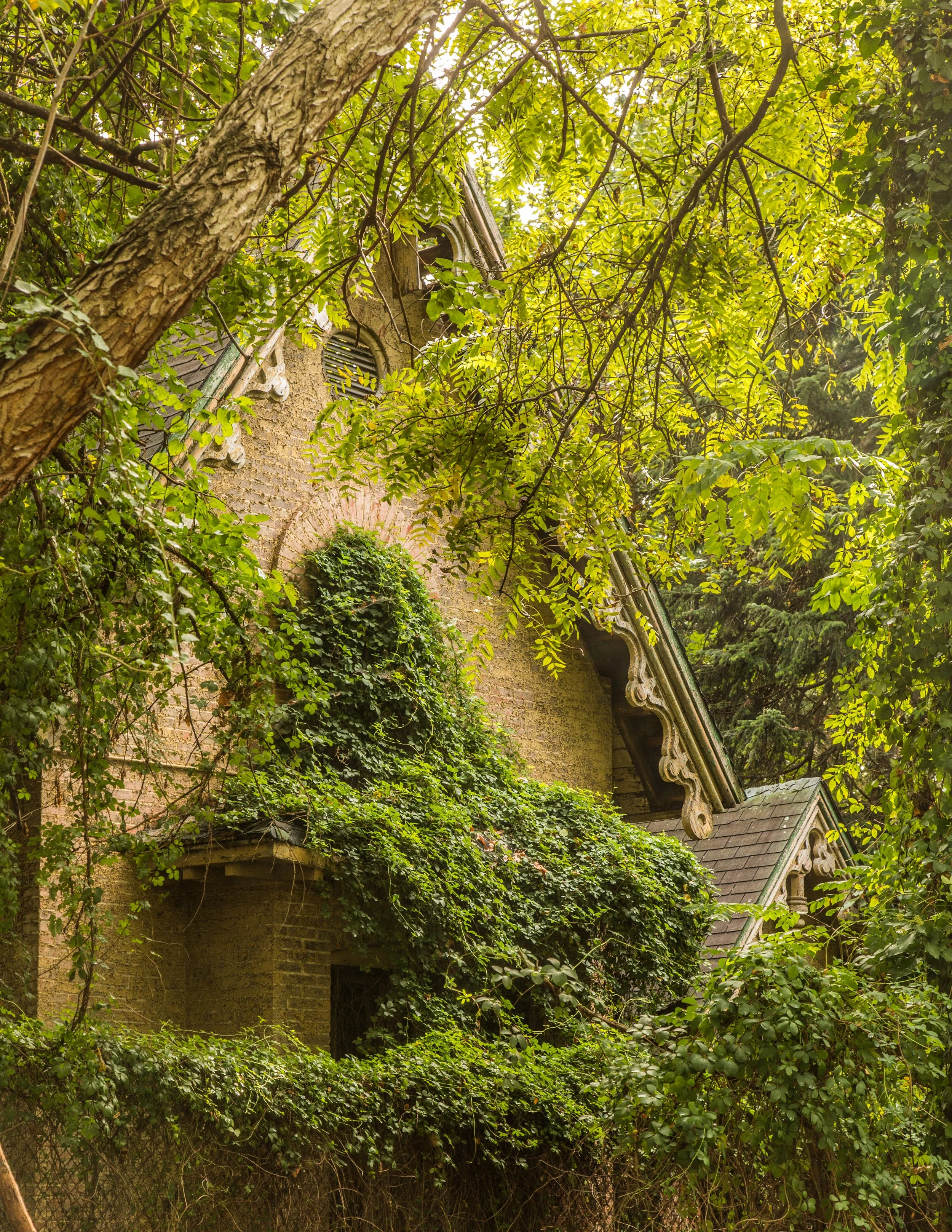
Work continues in Philanthropy Hall and Thompson Dining Room. Ahead are the Parlor, the final principal room on Clifton's primary floor awaiting restoration, and the second-floor Billiard Room.
The Gardener's Cottage still waits for its restoration. New research will lead to new discoveries, and Friends of Clifton Mansion will continue the promise begun in 1996.
CLIFTON’S STORY IS
FAR FROM FINISHED
Thirty years of extraordinary progress have revealed what is possible. The next chapter will depend on all who believe this remarkable place is worth preserving.
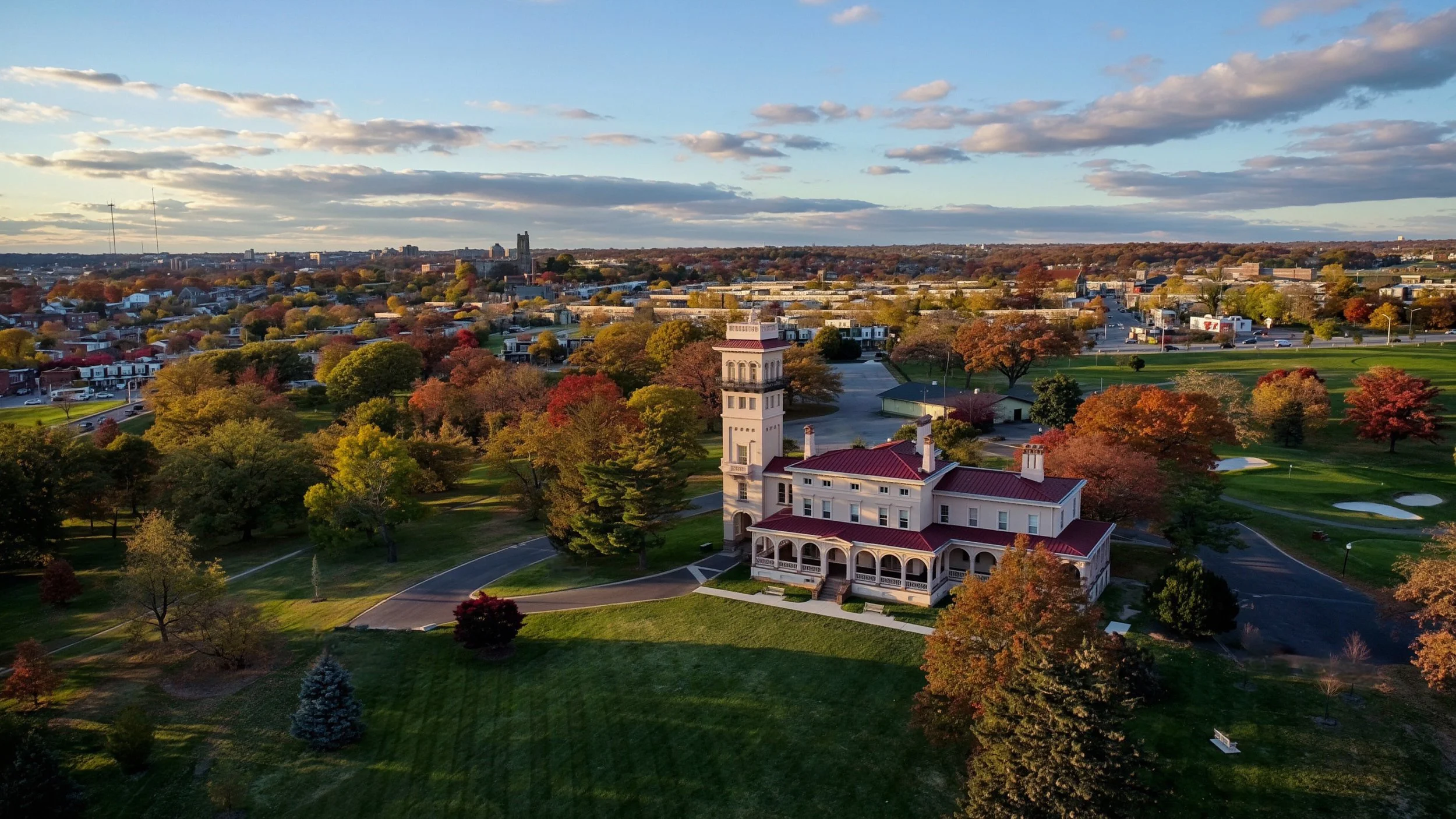
Today, because neighbors, donors, and preservation partners answered that call, Clifton stands restored and renewed, a living landmark connecting Baltimore’s past with its present and future. For three decades, Friends of Clifton Mansion has led the painstaking work of uncovering its beauty, preserving its historic fabric, and ensuring that its remarkable stories are not lost to time.
But Clifton’s story is still being written. Your support will help carry the restoration forward, protect all that has been accomplished, and preserve this extraordinary Baltimore landmark for the generations that follow.
Clifton has endured for more than two centuries. Together, we can ensure its story lives on.